

Peter Santa Cruz, MBA, IIP, CTIE
Owing to today’s rapid changes and constant dynamics in the business environment; globalization, new technology, new competitors, customer’s shifting priorities, and intense market competition, business are in a constant mission to reinvent themselves to survive and to achieve business success. Every business enterprise, whether a large global fortune 500 company, medium, or small local company, needs well-executed competitive advantage strategies/plans to generate growth, opportunities, and a robust bottom line, while also simultaneously providing current and future customers with a range of desirable products and services that deliver good value and effectiveness.
This is all particularly important and relevant today given the everchanging business arena and global competition. Enter – thinking strategically, and the importance of strategies for competitive advantage defined as follows:
“Competitive advantage refers to organizational competencies and resources which are distinctive or superior relative to those of rivals, and matched appropriately to environmental opportunities” (Peteraf, 1993).
According to the book: Competitive Strategies by Michael Porter (1980), he strategically underscores a two-pronged approach that can be followed and applied to achieve competitive success. The first point with three steps signifies the three generic strategies used for dealing with competitive forces, and the second point with five steps which is the number of competitive forces that determines what companies must do in order to remain competitive. Both approaches are further elaborated on below.
In developing competitive advantage strategies/plans, organizations must first perform a thorough internal and external analysis to gather enough usable information and data for analysis of the industry sector, and the operating environment, to grasp an overall view of the industry. Organizations must also take into consideration all the factors that affect the industry and set competition in motion. According to Porter (1980) the author in the book Competitive Strategy:
The three strategies for dealing with competitive forces are:
1. Differentiation – Entails competing on the basis of providing value added quality, products or services, and differentiation to customers who develop a preference and are willing to pay higher premiums for and excellent product or service. It requires creative flair, research capability, and strong marketing.
2. Overall cost leadership – Cost based leadership involves offering products or services at the lowest possible cost. Quality and service are still minded, but cost reduction provides focus to the offering company as a competitive advantage.
3. Focus – Involves combining the two above elements of differentiation and overall cost leadership while targeting a specific market.
In addition to carefully scanning the industry as well as the market environment, it is also necessary that a company’s leadership team monitors and is aware of the effects of the five rules of competition in order to keep relevant, help formulate a plan to remain competitive, and ultimately generate a successful profitable business operation.
The five competitive forces (Porter, 1980) that must be observed and dealt with to help determine what a company must do to remain competitive:
1. Entry of new competitors (level of ease or difficulty of entry into the industry), requires a competitive response which can use up valuable resources and possibly reduce profits.
2. Availability of substitute or similar products or services, this limits price points as cheaper alternatives are available for purchase in the market-place for customers.
3. If customers have bargaining power and use it, profit margins will be reduced.
4. Suppliers can flex their bargaining power too and charge higher prices for their goods and services, thus affecting profit margins.
5. Competition rivalry, leads to investing more resources in marketing, research and development (R&D), and possibly lower prices – all resulting in profit reductions.
The competitive strength of these five forces combined will ultimately impact and contribute to determine profitability or loss for a company. Additionally, these factors correlate to an organization’s marketing decisions and should be engaged to increase brand recognition, design entry barriers, or strengthen additional strategies for a bigger market share, and ultimately increased profits.
Thinking Strategically
Successful, competitive, and profitable companies masterfully apply competitive strategies/plans to fully achieve business objectives.
According to Pearce and Robinson in the text: Strategic Management: Formulation, Implementation and Control (Pearce & Robinson, 2011), having a competitive advantage requires thinking and acting strategically for three good reasons:
First – Thinking Strategically brings to light the importance of environmental scanning in strategic planning.
Second – Developing Grand Strategies serves to consider alternative decisions leading to an effective strategy formulation and choices.
Third – Creating a Strategic Road Map assist in exploring the steps involved in building an organizational roadmap and structure to formulate effective action plans and goals.
We Further go into building an organizational roadmap and structure to formulate effective action plans and goals, as well as details relative to the importance and effectiveness of each approach, concepts, and analytical tools to be used in the development, and the different challenges facing strategic planners in the performance of their tasks.
Given a firm’s overall objectives and parameters, a thorough scanning of the environment must be performed to fully understand its exact position, goals, and the target market. Internal and external analysis must be carried out to assess the company’s current situation, and carefully analyze, review, and foresee relevant data that may have a profound impact on the firm’s future capacity to accomplish objectives, and to identify the necessary steps to get around perceived hindrances and use accessible assets to realize the firm’s ultimate goals.
The Importance and Effectiveness of Environmental Scanning
In an ever-increasing competitive marketplace, firms must scan the external as well as internal environment of their organization to determine trends and factors, which can affect the operation of the organization. Performing an environmental scanning is important in enabling the firm to ascertain the different threats and opportunities lurking in its environment, and formulate strategic moves to take advantage of every opportunity, and mitigate or eliminate the threats. Scanning the business environment presents management the information they need to plan accordingly as a means to cope effectively with the anticipated changes that can impact the company’s viability.
Concept and Analytic Tools to use in the Development of Strategic Plans
To ensure effective business strategies, all available data must be examined to aid in forecasting the upcoming by identifying the emerging trends and the target market’s changing expectations for months/years to come. Management must predict opportunities and challenges so they are ready when any issues present themselves. By identifying competencies and discovering ways to develop the firm’s strengths, management can increase the chances of propelling the company into a more competitive and profitable future. The ability of management to effectively incorporate the results of environmental scanning can assist in starting a turn-around for a struggling business or drive a successful firm into new successes.
Challenges Facing Strategic Planners
Two issues are commonly encountered by strategic planners; budgetary constraints and the ability to acquire sufficient and relevant information. In many cases only a limited budget is allocated for the external environmental scanning. Obtaining the right sound information can be very costly, but accurate information is necessary in developing a broad understanding of the company’s target market.
Comprehensive good information increases the planner’s ability of arriving at the most appropriate long-term goals, and provides a better chance of success. Insufficient data can lead to the selection of the wrong parameters or information channels required to make the best possible decisions, thereby risking the possibility of deriving an inappropriate long-term strategic solution resulting which can result in in failure.
Developing Grand Strategies
The Importance and Effectiveness of Strategy Formulation and Choice
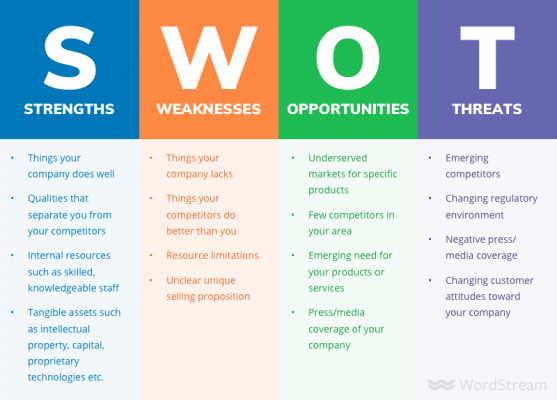
Strategy formulation and choice is patently important in resolving any issues, and alternative solutions can be achieved after careful examination of the factors that impact the competitive position and market growth. By examining its external and internal circumstances by performing a SWOT analysis for instance, a company can set itself apart from the competition, and discover ways to differentiate themselves from the rest of the competition by finding and uncovering opportunities that would not have been apparent without performing such an analysis.
 *good2c.com
Concept and Analytic Tools to be used in the Development of Strategic Plan
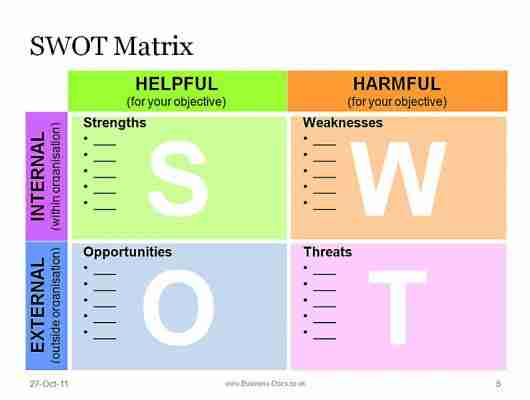
The SWOT analysis is a good tool in developing strategic plans. SWOT is an acronym for; Strengths, Weaknesses, Opportunities, and Threats. Performing a SWOT analysis using the SWOT matrix to help come up with the right decisions is a good idea to assist get results and to arrive at an alternative strategy which will enhance the chances of success. For instance, by using the SWOT matrix, we can find out the following information and act accordingly:
First, when strategies appear to be on target and deviating too much may hinder the company’s competitive advantage, a good strategy can be to protect profitable growth through vertical integration for instance.
Second, when the company is looking for alternative moves to improve its position, the firm’s strategic plan can be re-evaluated and other strategies can be used to counter a competitor’s tactical moves.
Third, to counter a firm’s liquidity crunch, some asset can be divested to generate cash and help effect a product turn-around. Lastly, to maintain a competitive edge in the marketplace when the market seems to have flattened, a diversification can take place. If a SWOT analysis indicates limited internal growth, diversifying into a promising growth area can be a good alternative solution for the company.
Challenges Facing Strategic Planners
Additional challenges facing strategic planners are; the ability to accurately forecast the changes in the marketplace, and devise effective strategies that will help in capitalizing on a company’s strength and opportunities, to successfully counteract its weaknesses and threats.
Another challenge is the planner’s ability to accurately analyze and evaluate all the information and data gathered in order to make the best possible decision to undertake. This task is a critical responsibility and the strategic planner must be able to make accurate and perceptive judgments based on all the information and data to effectively arrive at the right decisions and apply the information to create new and profitable ways and ultimately company success.
Creating a Strategic Road Map
In charting-out a road map, a careful Company analysis is conducted on the SWOT chart to ensure that the initiatives are relevant to the industry as well as the particular company’s situation. In addition, in performing the SWOT analysis to create a roadmap, management must ascertain that the businesses internal processes and structures are in alignment with the marketplace objectives. Equally important is to ensure that all the goals set are optimally aligned with the strategic plans of the company for maximum success.
Concept and Analytic Tools to be used in the Development of Strategic Plan
In developing a strategic plan, management must set clear objectives, perform a SWOT analysis of the internal and external conditions of the company, establish a prudent set of strategic alternatives, align set of goals and metrics that ensure progress, and ensure the adaptability of each of the above to the changing marketplace.
The Importance and Effectiveness of the Formulation of Action Plans and Goals
The use of a SWOT analysis/matrix provides a clear snapshot of a company in relation to the industry’s marketplace. The use of SWOT enables to determine the best strategic alternative a company must take up to realize the company’s goals. However, management must still be cognizant of the constant changing dynamics in the marketplace creating a necessity for the strategic plans to be flexible and if necessary changeable. When the marketplace changes, the strategic plan must be revisited and adjusted to keep synergy between the company’s goal and its overall strategy. Additionally, the plan’s flexibility must be designed to be able to make a distinction if the change must be directed towards the goal or the strategic alternative.
Challenges Facing Strategic Planners
In creating a strategic roadmap, the strategic planner is faced with the challenges of finding the right strategic alliances and partners that are aligned with their ultimate goal. Another issue faced by the strategic planner is the global implications to the organizational structure. Different mindsets between the various participants can trigger inconsistent business operation and leadership structure throughout. The challenge is for management to decide on the optimal organizational structure that will lead to generating value for its customers and profits for the company.
Conclusion
In conclusion, thinking strategically and effectively utilizing available tools and data to create strategies for competitive advantage can yield massive revenues, and can mean the difference between being a successful company and industry leader or a failed enterprise — particularly in modern times of extreme business competition, new emerging technologies, and intense globalization.
References
Pearce, John A. & Robinson, Richard B. Jr. (2005). Strategic Management: Formulation, Implementation and Control. Ninth Edition. The McGraw-Hill Companies. 2005. New York, NY.
Porter, Michael. (1980). Competitive Strategy. Free Press, (1980). New York, NY.
Peteraf, M. A. (1993). The cornerstones of competitive advantage: A resource-based view. Strategic Management Journal, 14(3), 179–191.